 Kofun Explorer Map
THE OUTLINE
Mound shape
Keyhole, round, square or octagonal: the outline is the first clue you can read on a map.
KOFUN FIELD GUIDE CONSTRUCTION & STRUCTURE
Beneath Japan’s ancient burial mounds lies a remarkable feat of construction. Discover how earth was shaped, chambers were assembled, and stone was carried across the sea. Then see the details for yourself.
Look beneath the surface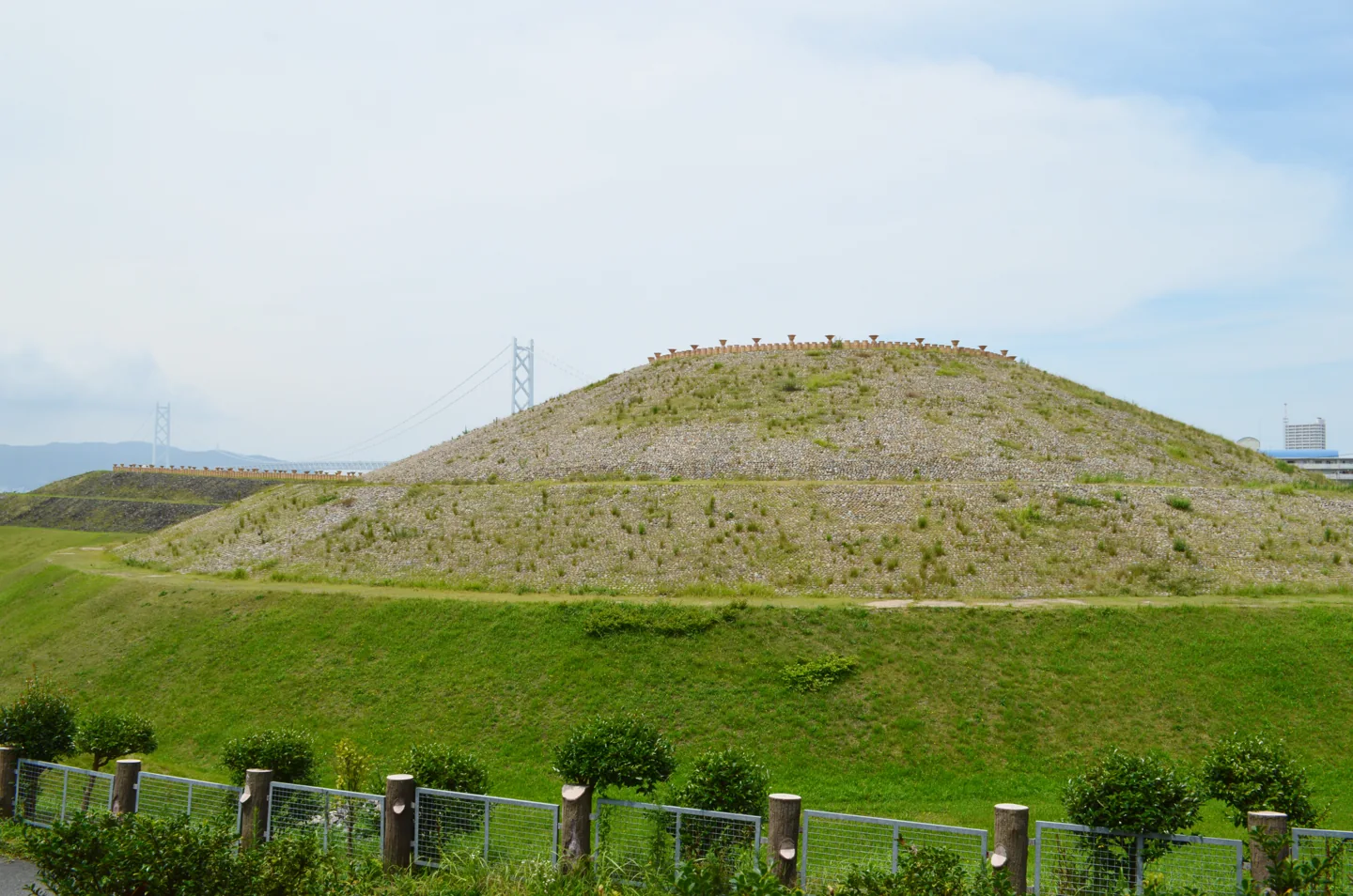
A LOOK INSIDE
Start with the outline, then the construction of the mound, and finally the burial facilities inside.
THE OUTLINE
Keyhole, round, square or octagonal: the outline is the first clue you can read on a map.
THE CONSTRUCTION
Tiers, stone facing and compacted earth reveal how the mound was built and finished.
THE INTERIOR
A chamber or stone compartment encloses the coffin. The hidden interior also tells a story of change.
SHAPING THE EARTH
Many mounds now covered in trees once had stone-covered slopes and rows of haniwa. Their surfaces, terraces and foundations all reveal deliberate choices.
Level terraces divide the mound into steps. Daisen Kofun and Goshikizuka Kofun are examples of three-tier construction.
Stones laid across a slope give the mound a finished surface and are thought to help protect it. Their size and origin vary from site to site.
Earth is laid in layers and firmly compacted. This technique is documented at Iwayayama Kofun. Not every kind of mound fill should be called rammed earth.
A moat surrounds a mound; a projecting platform provided space for rituals; haniwa stood on terraces and other surfaces. These features are not present at every kofun.
Sources: [1] Kobe City / [5] Asuka Village
SPACES FOR THE DEAD
The key distinction is how the coffin enters. A change in access also changes how people can be buried—and whether the space can readily be reopened for later burials.
Mainly Early–Middle period / 3rd–5th c.
Tateana-shiki sekishitsu
The coffin is placed in a burial space in the upper mound and covered with roof slabs. Without a side passage, the chamber is not designed for repeated reopening.
Introduced in the Middle period; widespread later
Yokoana-shiki sekishitsu
An entrance passage (sendō) leads to the burial chamber (genshitsu). Removing the entrance blocking allows the space to be accessed again for additional burials.
Diagrams show the direction of access, not an excavated layout. Dates are a broad guide, especially for the Kinai region; traditions overlapped and varied locally. Corridor chambers continued into the 7th century.
Sources: [2] Kashiwara City / [3] Habikino City
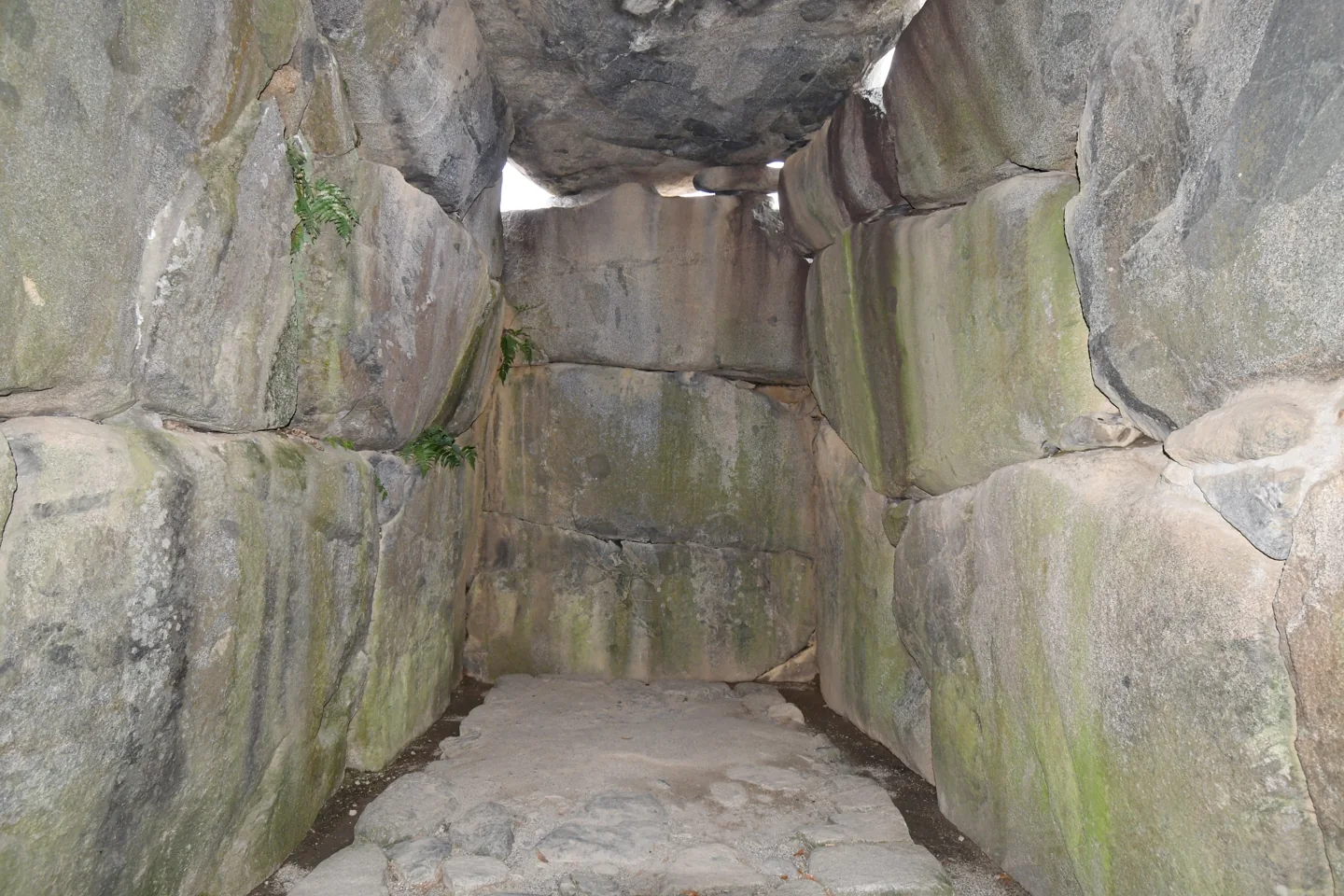
LOOK CLOSER / ISHIBUTAI
At Ishibutai, the earth mound has been lost, exposing the enormous corridor-style chamber. The surviving stones make the relationship between the chamber and its vanished mound especially clear.
Explore Ishibutai KofunPhoto sources and licenses: photo credits.
The Final Kofun period also saw side-opening stone compartments (yokoguchi-shiki sekkaku): box-like enclosures for a coffin. Some were hollowed from large stones; others were assembled from cut blocks. Kengoshizuka Kofun has two compartments carved into one great stone. Oni no Manaita & Oni no Setchin and Kannonzuka Kofun (Habikino) offer further examples.
By contrast, the finely cut stones at Iwayayama Kofun form a corridor-style chamber. Cut-stone construction alone does not make a structure a side-opening compartment. Thin slabs laid in courses can be seen in the construction of Hanayama-Nishizuka Kofun and Obitoke-Koganezuka Kofun.
Sources: [4] Habikino City / [5] Asuka Village / [6] Asuka Village / [7] Asuka Historical National Government Park
WITHIN THE CHAMBER
The chamber is the space; the coffin is the container for the body. Coffins were made from wood, stone and other materials. Stone forms differed by period and region.
| Form | Main period | What to look for |
|---|---|---|
| Split-log wooden coffin | Mainly Early | A hollowed log split lengthwise. This is a wooden form, not a stone coffin. |
| Split-bamboo & boat-shaped stone coffins | Mainly Early–Middle | Stone forms resembling split-log coffins or boats. |
| Chest-shaped stone coffin | Mainly Middle | A large coffin assembled from base, side and lid stones. Look for projections thought to have helped with handling. |
| House-shaped stone coffin | Mainly Late–Final | Recognizable by its roof-like lid. The body may be hollowed out or assembled from slabs. |
The coffin body is carved from a single stone. Its size and interior reveal the scale of material and workmanship involved.
The body is built from separate stone slabs. The joints between those slabs are the details to look for.
MATERIALS & CONNECTIONS
The source of a stone reveals connections beyond the mound. Builders used local materials, but some coffins also made remarkable journeys from distant regions.
STONE IN FOCUS / MAKADO STONE
Makado stone, often called “Aso pink stone,” is a welded tuff from the Uto Peninsula in Kumamoto. House-shaped coffins made from this stone survive at Kabutoyama Kofun and Maruyama Kofun in Shiga.
This diagram connects the source and destination regions; it does not reconstruct the exact route of an individual coffin.
STONE IN FOCUS / MOZU KOFUN
The facing stones that once covered Daisen Kofun are estimated at some 5.36 million stones, weighing about 14,000 tonnes. An engineering reconstruction by Obayashi Corporation (1985) proposed that this vast quantity was gathered along the Ishizu River in Sakai and hauled on rafts through purpose-built canals. The image of the Ishizu as “the river that carried the stone” rests on this kind of reconstruction.
Daisen Kofun has not undergone full excavation, so the source of its facing stones is not archaeologically established. The diagram above illustrates a reconstruction estimate.
Raising a giant mound demanded quantities of iron tools for digging earth and moving stone. Sakai’s bladesmith association relates that, to build Nintoku’s tomb and other kofun, smiths who made spades, hoes and earth-working tools gathered and settled here — a memory preserved in place names such as Tannan and Hikishō. The story told locally is that this ancient store of ironworking skill became the foundation of Sakai’s knives (Sakai uchihamono), prized today by professional chefs.
That said, the industry’s documented history is officially placed in the 15th–16th centuries. Skills were honed making matchlock guns and tobacco knives, and the Tokugawa shogunate granted the “Sakai kiwame” stamp with monopoly sales rights, spreading the name nationwide. No firm evidence shows the mound-builders’ technology passing directly into the blade trade, so this is best enjoyed as one account of roots reaching back to the age of the kofun.
Sources: [9] Agency for Cultural Affairs / [10] Kashiba City, Nijo-san Museum / [11] Uto City / [12] Yasu City / [13] Obayashi Corporation / [14] Sakai City / [15] Sakai Cutlery Cooperative Association
QUESTIONS & ANSWERS
The key difference is access. A pit-style chamber receives the coffin from above and is sealed, without provision for routine reopening. A corridor-style chamber has a side passage; removing the entrance blocking allows further burials.
Ishibutai Kofun offers the opportunity to visit inside. Other surviving chambers are not necessarily open at all times. For Bakuya Kofun, Miyayama No. 2 Kofun, Kannonzuka Kofun (Habikino) and Kabutoyama Kofun, check the individual page and current official guidance.
They serve different purposes. Facing stones cover the outer surface of the mound; chamber stones form the walls and roof of the burial space inside. Goshikizuka Kofun is a good place to see restored stone facing.
Octagonal plans are closely associated with 7th-century royal burials. Examples include Kengoshizuka Kofun, the joint mausoleum of Tenmu and Jito at Noguchi-no-o-no-haka Kofun, and Nakaoyama Kofun, proposed as Emperor Monmu’s tomb. Shape alone cannot identify the person buried.
FROM READING TO EXPLORING
Explore the map and discover these structures for yourself.
Photography: Saigen Jiro / Wikimedia Commons · CC0 1.0.
Goshikizuka Kofun / Ishibutai burial chamber. Cropped and compressed for display.
This introductory guide draws on public information from local governments, museums and cultural heritage bodies. Dates and classifications vary by region and interpretation. Diagrams simplify the structures; see individual kofun pages for detailed evidence and sources.

